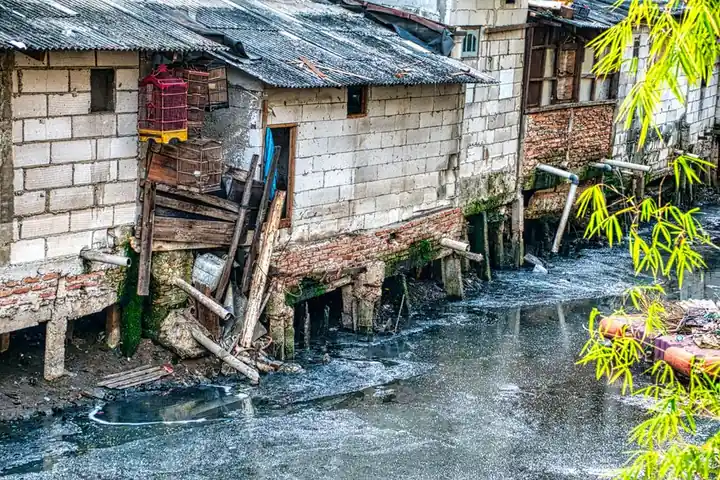
Sewage backup cleanup and regular water damage cleanup are not the same job. A sewage backup is Category 3 water - black water loaded with bacteria, viruses, and parasites - so the cleanup requires full PPE, removal of porous materials, hospital-grade disinfection, and often a third-party clearance test. Regular water damage cleanup handles Category 1 clean water from a supply line or rain intrusion, which can usually be dried in place without tearing out drywall or flooring.
That single distinction - the category of the water - drives every decision that follows: what we can save, what has to go, how long the job takes, and whether your insurance pays. Below we break down the difference between sewage backup and water damage cleanup in Fort Pierce, what each process actually involves, and how to tell which one you are looking at when water is on your floor at 2 a.m.
The short answer: category of water decides the cleanup
Sewage backup cleanup vs water damage cleanup Fort Pierce is a category question before it is a cleaning question. The IICRC - the standards body the restoration industry follows - sorts water into three categories, and the category is set by the source, not by how the water looks.
- Category 1: clean water from a supply line, water heater, or rainwater. Drinkable at the source.
- Category 2: gray water from a washing machine, dishwasher, or toilet bowl (no waste). Some contamination.
- Category 3: black water from a sewer line, toilet trap, or any water that has sat long enough to grow dangerous bacteria. This is the sewage category.
Category 1 water that sits more than 48 hours at Florida room temperature becomes Category 2, and Category 2 becomes Category 3. That is why the clock matters as much as the source. A clean supply-line leak in a closed-up Fort Pierce house in July can turn into a Category 3 job in two days.
What is the difference between sewage backup and water damage cleanup in Fort Pierce?
The difference between sewage backup and water damage cleanup in Fort Pierce comes down to four things: what we can save, what protective gear we wear, how we disinfect, and how we document the loss for your insurance carrier.
What we can save
On a clean-water job, we dry carpet, pad, drywall, and hardwood in place whenever the material has not delaminated or cupped. On a sewage job, anything porous that touched the water is gone. That means carpet, pad, baseboards, insulation, and the bottom 12 to 24 inches of drywall in the affected room. Tile, concrete, and framing lumber can be disinfected and kept.
Protective gear and containment
Clean-water crews work in standard PPE. Sewage crews work in Tyvek suits, full-face respirators with P100 cartridges, double gloves, and rubber boots. We set up negative air containment with HEPA filtration so airborne pathogens do not migrate into the rest of your house while we work.
Disinfection
Clean-water drying is about moisture. Sewage cleanup is about moisture and killing pathogens. We apply an EPA-registered hospital-grade disinfectant to every hard surface, then re-apply after demolition. On larger losses we bring in a third-party hygienist to swab-test before we close the job.
Insurance documentation
Sewage claims need a different paper trail. We photograph and log every contaminated item before disposal, note the category of water on the report, and provide the adjuster with a scope that separates biohazard handling from standard drying. That documentation is what gets the claim approved instead of argued.
If you are dealing with a supply-line break rather than a sewer line, the job looks completely different - that is water damage restoration Fort Pierce in its standard form, and it is usually faster and cheaper.
Why Fort Pierce properties see more sewage backups than most Florida cities
Fort Pierce sits on a coastal flat with a high water table, and that combination makes sewage backups a recurring problem rather than a rare one. Three local factors drive most of the calls we run.
Age of the sewer laterals. A large share of the housing stock in older Fort Pierce neighborhoods was built between the 1950s and 1970s, when cast iron and Orangeburg pipe were standard for the lateral that runs from the house to the city main. Cast iron scales shut from the inside. Orangeburg - a tar-paper pipe used in that era - deforms and collapses. Both fail slowly, then all at once.
Root intrusion. Live oak and ficus roots find the joints in old laterals and grow into them. Every heavy rain pushes roots and debris into the line at the same time the city main is surging.
Storm surge and saturated ground. When the ground is already saturated from a tropical system, the city main can back up under pressure, and the lowest fixture in your house - usually a ground-floor shower or a laundry standpipe - becomes the relief valve. We see clusters of these calls in the neighborhoods near the Indian River Lagoon and along the older streets off US-1 after every named storm. If a storm is what pushed water into your home, that is storm damage restoration Fort Pierce territory and the scope changes again.
Sewage backup health risks in Fort Pierce you should not ignore
Sewage backup health risks in Fort Pierce are real and they are not limited to the people who wade into the water. Raw sewage carries E. coli, Salmonella, hepatitis A, norovirus, Giardia, and a long list of other pathogens. In a warm, humid Florida house, those organisms stay viable on wet surfaces for days.
The exposure routes that catch homeowners off guard:
- Aerosolized bacteria. A wet/dry shop vac or a box fan blowing across a contaminated floor spreads pathogens through the air. This is the single most common mistake we see.
- Cross-contamination. Walking from the flooded bathroom to the kitchen in socks or bare feet moves bacteria through the whole house.
- Hidden saturation. Sewage wicks up drywall and into the subfloor faster than clean water because of its solids content. The visible puddle is often 20 percent of the actual contamination.
- Secondary mold. Mold can colonize wet drywall in 24 to 48 hours in a Fort Pierce summer. Sewage-contaminated mold is a bigger remediation job than either problem alone.
If you have asthma, a compromised immune system, or young children in the house, do not enter the affected area at all. Shut the door, turn off the HVAC if the return is near the spill, and call us.
How to clean up a sewage backup in Fort Pierce FL
How to clean up a sewage backup in Fort Pierce FL starts with one rule: stop the source, then stop the spread. Here is the sequence we run, in order.
- Stop the flow. If the backup is still active, stop using water in the house - no toilets, no showers, no washing machine. Call a licensed plumber to clear the blockage before any cleanup begins.
- Isolate the area. Close doors, block the room with plastic sheeting if you have it, and keep pets and kids out.
- Kill the air movement. Turn off the HVAC system if the air handler or return is anywhere near the affected zone. Do not run fans.
- Document everything. Photograph the standing water, the source, and every damaged item before anything is moved. Your adjuster will want this.
- Extract the standing water. We use truck-mount and portable extraction units with dedicated sewage-rated hoses that never touch our clean-water equipment.
- Remove contaminated materials. Carpet, pad, baseboards, insulation, and the saturated lower section of drywall go into sealed bags and off the property.
- Disinfect and dry. Hospital-grade disinfectant on every hard surface, then air movers and dehumidifiers to bring the structure back under 16 percent moisture content on the framing.
- Verify. Moisture meters and thermal imaging confirm the structure is dry. On larger jobs, a third-party hygienist swabs surfaces for coliform bacteria before we sign off.
A typical residential sewage backup in Fort Pierce - one bathroom, roughly 150 square feet - takes three to five days from extraction to final dry-down. A backup that reaches a hallway and a bedroom runs seven to ten days.
If the water is coming from a broken supply line rather than a drain, the process is shorter and the material list is longer. That is water extraction Fort Pierce in its clean-water form, and most of your flooring and drywall can be saved.
What regular water damage cleanup looks like by comparison
Regular water damage cleanup in Fort Pierce is a drying job, not a demolition job. When the source is a supply line, a water heater, an appliance, or rain coming through a roof leak, the water is Category 1 or Category 2 and the goal is to dry the structure in place.
The standard sequence:
- Extract standing water with truck-mount or portable units.
- Set air movers and LGR dehumidifiers - usually one air mover per 10 to 16 linear feet of wall.
- Monitor moisture daily with penetrating and non-penetrating meters.
- Dry to standard: typically three to five days for a Category 1 loss, longer for Category 2.
- Replace only what cannot be dried - usually pad, sometimes drywall if it was saturated above the flood cut line.
No Tyvek suits. No negative air containment. No biohazard disposal. The cost difference is significant: a clean-water dry-out on a 200-square-foot room in Fort Pierce runs roughly $1,200 to $2,800 in 2026, while a sewage backup of the same size runs $3,500 to $8,000 once you factor in demolition, biohazard disposal, and disinfection.
For a deeper look at the clean-water side, our water removal Fort Pierce team handles everything from a slow appliance leak to a full supply-line failure.
Is sewage backup cleanup covered by insurance in Fort Pierce?
Is sewage backup cleanup covered by insurance in Fort Pierce? Sometimes - and the deciding factor is almost always whether you bought a sewer backup endorsement. A standard Florida homeowners policy (HO-3 or HO-6) covers sudden and accidental water damage from a plumbing supply line. It usually does not cover water that backs up through a drain or sewer unless you added the endorsement.
What that endorsement typically does:
- Adds $5,000 to $25,000 of coverage for sewer or drain backup.
- Costs roughly $50 to $150 per year on a typical Fort Pierce policy.
- Covers cleanup, demolition, and damaged contents up to the sublimit.
Two things to know before you file. First, most policies exclude damage from a backup that the homeowner knew about and did not address - so if a plumber told you last year the lateral was failing, document that conversation. Second, flood damage from a storm surge or rising water is not covered by homeowners insurance at all; that is a separate NFIP or private flood policy. If a storm pushed water into your home, call us and we will help you sort out which policy applies.
We work directly with adjusters every week. We document the loss to the carrier's standard, itemize the biohazard scope separately from the drying scope, and photograph everything before disposal. That is the difference between a claim that gets paid in two weeks and one that drags for two months.
Common mistakes we see on sewage and water jobs
Common mistakes on sewage and water jobs usually make the loss bigger, not smaller. The ones we see most often in Fort Pierce:
- Running a shop vac on sewage. It aerosolizes bacteria and contaminates the vacuum. That vacuum is now hazardous waste.
- Running fans or the HVAC. Same problem - it spreads pathogens through the house.
- Pulling up carpet and tossing it in the garage. Contaminated carpet in an attached garage is still inside your home's air envelope. It needs to leave the property in sealed bags.
- Bleach-and-done disinfection. Household bleach at 1:10 kills a lot, but it does not penetrate porous surfaces and it does not pass a third-party clearance test. We use EPA-registered hospital-grade products for a reason.
- Waiting on the plumber before calling us. The plumber clears the blockage; we handle the contamination. Those are two different calls and they can run in parallel.
- Assuming the smell going away means the problem is gone. Sewage wicks into drywall and subfloor. The smell fades before the bacteria does.
When to call a professional
Call a professional the moment you see water coming up through a drain, a toilet, or a floor drain - that is a sewage backup until proven otherwise, and the first 24 hours decide how much of your home you keep. We handle sewage removal Fort Pierce with dedicated equipment, hospital-grade disinfection, and the documentation your carrier needs.
You should also call us if a clean-water leak has been sitting more than 48 hours, if you can smell a musty odor after a leak you thought you dried, or if you see discoloration spreading up drywall. We will tell you on the phone whether it is a sewage job or a standard dry-out, and what it will cost before we start.
Frequently Asked Questions
What is the difference between sewage backup cleanup and water damage cleanup in Fort Pierce?
Sewage backup cleanup handles Category 3 black water and requires PPE, removal of all porous materials, hospital-grade disinfection, and often third-party clearance testing. Regular water damage cleanup handles Category 1 or 2 water and focuses on extraction and structural drying, usually without demolition. The category of the water - not the volume - sets the process.
Is sewage backup cleanup covered by insurance in Fort Pierce?
Only if your policy has a sewer backup endorsement, which typically adds $5,000 to $25,000 of coverage for $50 to $150 per year. Standard Florida homeowners policies cover supply-line leaks but exclude drain and sewer backups unless the endorsement is added. Storm-surge flooding needs a separate flood policy.
How do I clean up a sewage backup in Fort Pierce?
Stop using water in the house, isolate the room, turn off the HVAC, and photograph everything before moving it. Do not run fans or a shop vac. Call a licensed plumber to clear the blockage and a restoration crew for the contamination. Porous materials must be removed and the structure disinfected - usually a three to five day job.
Who do I call for sewage backup in Fort Pierce?
Call a licensed plumber first to clear the blockage, then a restoration company for the cleanup. Fort Pierce Water Damage Pros handles the contamination side - extraction, demolition, disinfection, drying, and insurance documentation - and we can recommend a plumber if you do not have one.
Can I stay in my house during sewage backup cleanup?
Usually yes, if the affected area can be sealed off with containment and the HVAC return is not inside the contaminated zone. If the backup reached multiple rooms or the air handler, we may recommend you stay elsewhere for two to three days while we work. We will tell you on the first walkthrough.
Get help with Water Damage in Fort Pierce
Whether it is a sewage backup, a burst supply line, or a storm that pushed water under your door, we handle it - extraction, disinfection, drying, and the paperwork. Call Fort Pierce Water Damage Pros at +1 (321) 485-9763 and we will be on our way.