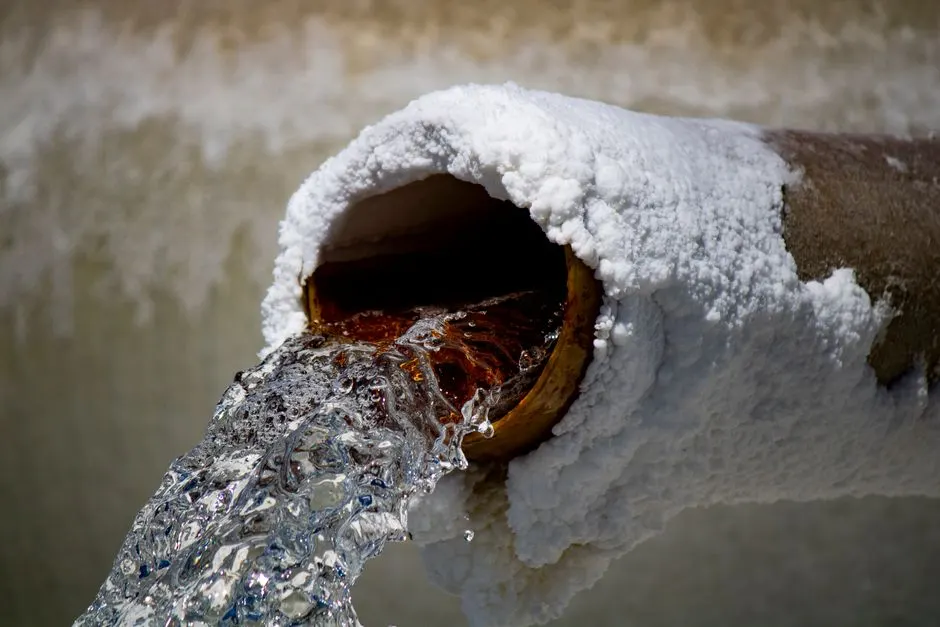
The clearest signs pipes are about to burst in Fort Pierce are discolored or metallic-tasting water, ticking or knocking sounds inside walls, visible corrosion on exposed pipes, and unexplained damp spots on floors or cabinets. Any one of these means a pipe is already failing. In older Fort Pierce homes, the combination of 40-to-70-year-old galvanized steel, year-round humidity, and our sandy, shifting soil makes that failure more likely than in newer construction.
We are Fort Pierce Water Damage Pros, and we have walked through hundreds of local homes where a slow drip turned into a flooded hallway overnight. This post covers what to look for, how to prevent burst pipes in Fort Pierce FL, and when to stop watching and start calling.
Why older Fort Pierce homes are prone to pipe bursts
Older Fort Pierce homes are prone to pipe bursts because the plumbing materials used before the 1980s were never designed to last this long in Florida's climate. Galvanized steel pipes corrode from the inside out. Polybutylene supply lines, common in homes built between 1978 and 1995, become brittle and fail at fittings. Copper pipes develop pinhole leaks after decades of slightly acidic water.
Fort Pierce adds two more stressors. Our soil is sandy and shifts with heavy summer rain, which puts lateral pressure on buried lines. And our humidity keeps pipe exteriors damp, accelerating rust on any exposed metal. A pipe that would last 50 years in a dry climate often gives out at 30 here.
If you own a home in neighborhoods like Lincoln Park, Harmony Heights, or along the Indian River Lagoon, there is a good chance your original plumbing is still in the walls. We see this constantly when we handle water damage restoration Fort Pierce calls after a supply line lets go.
What are the signs your pipes are about to burst in Fort Pierce?
The signs your pipes are about to burst in Fort Pierce show up in three places: at the tap, at the wall, and at the floor. Start with the tap. If your water runs brown or orange for the first 10 seconds each morning, rust is flaking off the inside of a galvanized pipe. That pipe is thinning.
Next, listen at the wall. A ticking, clicking, or knocking sound when you turn on a faucet means the pipe is moving against a strap or expanding under pressure. That movement eventually cracks a joint.
Finally, check the floor. A warm spot on a slab, a soft spot near a baseboard, or a cabinet floor that stays damp after you wipe it dry all point to a pinhole leak that has been running for weeks.
Signs of burst pipe Fort Pierce homeowners report first
- Water pressure that drops when a second fixture turns on
- A water bill that jumps 20% or more with no change in usage
- Rust-colored stains in a sink, tub, or toilet bowl
- A musty smell under a cabinet or in a closet
- Paint or drywall that bubbles near a ceiling line
Any two of those together is your cue to call a plumber before the pipe fails on its own schedule.
Pipe corrosion signs Fort Pierce homeowners should never ignore
Pipe corrosion signs Fort Pierce homeowners should never ignore are the ones you can see with a flashlight. Pull the access panel behind a tub or look under a sink at the shutoff valves. If the pipe is chalky white, flaky orange, or has a green crust at the joint, corrosion is active.
Galvanized pipe that has rusted shut inside will often show a bulge at a fitting. That bulge is mineral buildup pushing the metal outward. It is a 1-to-3-week warning before a split.
Copper pipe with pinhole leaks shows tiny blue-green dots on the surface. Those dots are the leak site. Left alone, a pinhole becomes a pinhole stream, then a split, usually within a month.
We also check the water heater connections on every pipe burst repair Fort Pierce job. The nipples at the top of a tank corrode faster than the tank itself and are a common failure point in homes older than 15 years.
How to tell if pipes will burst Fort Pierce: pressure and temperature clues
How to tell if pipes will burst Fort Pierce comes down to two numbers: pressure and temperature. Normal household water pressure is 40 to 60 psi. Anything above 80 psi stresses every joint in the system. You can buy a $12 pressure gauge that screws onto a hose bib and tells you in 30 seconds.
Temperature matters less here than in northern states, but it still matters. Fort Pierce rarely drops below 30°F, but when it does, an uninsulated pipe in an attic or garage can freeze overnight. A frozen pipe that thaws too fast splits at the weakest point.
Watch for these pressure and temperature red flags:
- Water hammer - a loud bang when a washing machine or dishwasher valve closes.
- Pressure that surges when the irrigation system kicks on.
- Attic pipes with no insulation wrap during a January cold snap.
- An outdoor shower or hose bib that drips after you close it.
If you see two or more, have a licensed plumber test the system. Catching a pressure problem early is far cheaper than a 24/7 emergency water removal Fort Pierce call at 2 a.m.
How to prevent burst pipes in Fort Pierce FL
How to prevent burst pipes in Fort Pierce FL starts with knowing what material you have. A plumber can scope your lines and tell you in an hour whether you are running galvanized, polybutylene, copper, or PEX. That single piece of information changes everything.
If you have galvanized or polybutylene, plan for replacement. A full repipe on a 1,500-square-foot Fort Pierce home runs $4,500 to $9,000 in 2026, depending on access and fixture count. That sounds steep until you compare it to a burst-pipe claim that averages $12,000 to $25,000 in water damage repair, mold remediation, and temporary housing.
If you have copper or PEX, prevention is cheaper:
- Install a pressure-reducing valve if your psi reads above 80.
- Add a water leak detector under the water heater and washing machine.
- Insulate any pipe that runs through the attic or garage.
- Shut off the main and drain the lines before any trip longer than a week.
- Have the system inspected every 24 months once it passes the 20-year mark.
We also recommend a whole-home shutoff valve that closes automatically when it senses a leak. They cost $600 to $1,200 installed and have saved more Fort Pierce kitchens than any other single device.
Common mistakes we see when homeowners ignore pipe warnings
The most expensive mistake is treating a slow drip as a small problem. A pinhole leak in a slab can run for months before it surfaces. By then the damage is under the floor, not on it.
The second mistake is shutting off the water and assuming the problem is solved. Shutting off the main stops the flow. It does not dry the structure. Wet drywall, insulation, and framing start growing mold in 24 to 48 hours. That is why we pair every pipe repair with structural drying Fort Pierce - the pipe fix is half the job.
The third mistake is calling a handyman for a supply line. Burst pipe repair involves cutting into the wall, replacing a section of line, and pressure-testing the repair. It is licensed plumbing work, and your insurance adjuster will ask for the invoice.
We also see homeowners ignore the water bill. A $40 jump is easy to miss. A $400 jump is a leak you have been paying for since last spring.
When to call a professional
Call a professional the moment you see standing water, hear running water with no fixture on, or smell sewage near a floor drain. Those are active failures, not warnings.
Call us sooner if you see any of these:
- Water pressure that drops every time a second fixture runs
- Rust-colored water that does not clear after 60 seconds
- A bulge or crust on any visible pipe
- A water bill that rose more than 20% month over month
- Any damp spot that returns after you dry it
Our team handles the full chain - we find the leak, fix the pipe, extract the water, and dry the structure. You do not have to coordinate three companies. If you are already seeing water, we also handle water removal Fort Pierce the same day.
One call, one crew, one invoice.
Frequently Asked Questions
What are the signs your pipes are about to burst in Fort Pierce?
Discolored water, ticking or knocking sounds in the walls, visible corrosion on exposed pipes, a water bill up 20% or more, and damp spots that return after drying. Any two of these together mean a pipe is already failing and should be inspected within 48 hours.
How do I prevent pipes from bursting in my Fort Pierce home?
Test your water pressure and keep it under 80 psi, insulate pipes in the attic and garage, install leak detectors under the water heater and washing machine, and replace galvanized or polybutylene lines. A full repipe runs $4,500 to $9,000 in 2026 and prevents most failures.
Who do I call for a burst pipe in Fort Pierce?
Call a licensed plumber for the pipe itself and a water damage company for the water. We handle both - pipe repair, water extraction, and structural drying - so you make one call. Reach us at +1 321-485-9763 any time, day or night.
Does insurance cover burst pipe damage in Fort Pierce?
Most Florida homeowner policies cover sudden burst pipe damage, including water extraction, drying, and drywall repair. They typically do not cover the pipe itself or damage from a leak you knew about and ignored. Document everything and call us before you file.
How long does it take to dry a Fort Pierce home after a pipe burst?
Most homes dry in 3 to 5 days with commercial dehumidifiers and air movers. A slab leak or a flooded crawl space can take 7 to 10 days. We monitor moisture daily and give you a written drying log for your insurance claim.
Get help with Water Damage in Fort Pierce
If you have spotted any of the warning signs above, do not wait for the pipe to fail on its own. We repair the pipe, remove the water, and dry the structure so your home is back to normal fast. Call Fort Pierce Water Damage Pros at +1 321-485-9763 - we answer 24/7 and we serve every neighborhood in Fort Pierce.